
Landlord plastering and decorating: clean walls that stay clean
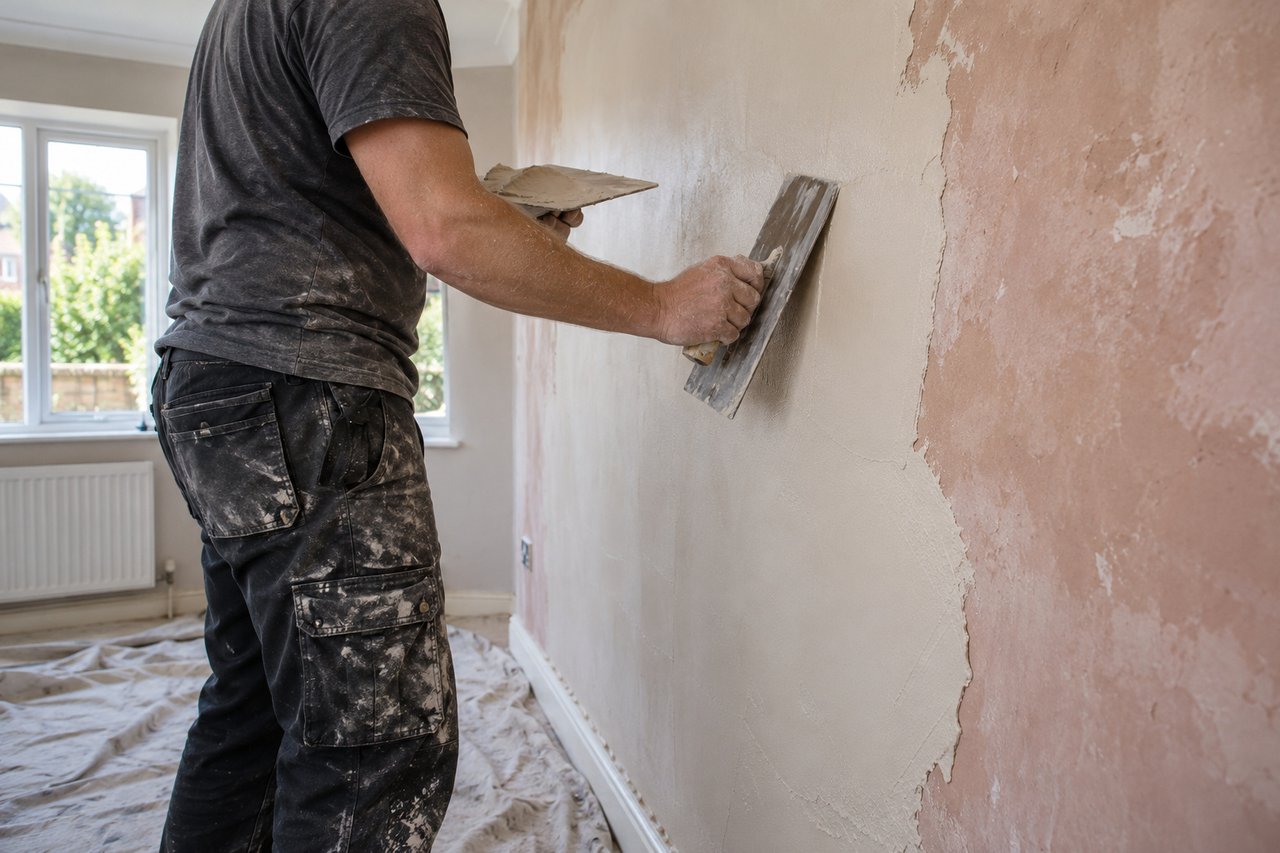
Landlord plastering and decorating gives a rented home a fresh finish that lasts between tenancies. This page explains when to skim or patch, which paints suit rentals, how to handle old paint and textured ceilings safely, and how to keep a turnaround short.
Last checked: 22 October 2026.
Landlord plastering and decorating: patch, skim or replaster
Choose the repair by the condition of the wall. Hairline cracks and small holes need filling. Wider cracks need cutting out and filling. Blown plaster needs to come off.
- Patch repair for isolated damage.
- Skim coat over sound surfaces to give a flat base for paint.
- Full replaster when the plaster is loose, damp-stained or hollow.
Do not plaster over damp. Find the cause first. Our damp, mould and ventilation page covers the checks.
Landlord skim coat plastering: preparation matters
A skim coat is a thin finishing layer. It hides old paint, wallpaper marks and minor defects. Good preparation decides the result.
Surfaces
Strip loose paper, wash off grease and fix cracks. Seal old, shiny paint with a bonding coat so the plaster grips.
Drying
New plaster must dry before decoration. Paint it too soon and it blisters. A mist coat of thinned emulsion is a standard first coat on fresh plaster.
Decorating between tenants: a fast turnaround
Turnaround speed protects rent. A decorator who plans the order of rooms and the paint quantities needs fewer days on site.
Use one neutral colour throughout. It makes touch-ups simple and avoids mismatches. Keep a record of the paint make and colour name in the property file.
Our void turnaround page describes the wider routine for quick re-lets.
Rental paint finish: choose durable, washable paint
Scrubbable matt emulsion suits walls, because it hides marks and wipes clean. A tougher or satin finish suits woodwork. Kitchens and bathrooms need paint that tolerates moisture.
On older solid walls, breathable paints let moisture pass through. Non-breathable coatings can trap it. Ask which kind the wall needs.
Lead paint and Artex: prepare safely
Homes built before the 1960s may have lead-based paint on old woodwork and walls. Do not dry sand it. Wet-scrape or use controlled methods and protect the dust from reaching rooms.
Textured coatings such as Artex used up to the 1990s can contain asbestos. Do not sand, scrape or drill it until it has been tested. Get a survey and follow HSE guidance.
Adviser tip from a Level 7 Senior Construction Manager (MCIOB): test any suspect ceiling before booking decorators. A late asbestos finding can stop a job for weeks.
Woodwork, ceilings and the details tenants notice
Tenants judge a home by its edges. Caulk gaps between skirting and wall, sand and prime bare timber, and paint ceilings white with a stain-blocking primer where old marks show.
Mask switches and sockets properly, or remove the covers. Cut in around windows with a steady hand, because crooked lines are the first thing a viewer sees.
Check the finish in daylight and under artificial light before the decorator leaves. Flaws that disappear in the afternoon show in the evening.
A simple decorating schedule
Work from the top down. Ceilings first, then walls, then woodwork, then touch-ups. Flooring goes last, or is protected throughout.
Allow time between coats. A rushed second coat on a damp first coat peels. If a room is cold, add gentle heat and ventilation rather than a blast of hot air, which causes cracking.
Protecting the finish after handover
Leave a labelled tin of each paint with the property file. Add a short note to the tenancy pack asking tenants to report marks and damp early. Small touch-ups at a check-in visit cost far less than a full redecoration later.
Plastering and energy works
Insulation and window work disturb plaster. Do the energy measures first, then plaster and decorate once. Internal wall insulation often needs a new finish. Our solid wall insulation page explains the options.
The EPC C by 2030 rule is confirmed government policy, not yet law, as at 22 October 2026. See the EPC C 2030 guide.
Who delivers the work
Compliant Lets is a trading name of LAMTANS Holdings Ltd. Plastering and decorating are delivered by LAMTANS Engineering Ltd and its trades. We agree the scope in writing, including what is excluded.
Sources
- HSE: Asbestos in the workplace, checked 22 October 2026
- GOV.UK: Your landlord's safety responsibilities, checked 22 October 2026
- GOV.UK: Housing health and safety rating system, guidance for landlords, checked 22 October 2026
Designed & developed by LAMTANS Technologies LLC, USA — part of the LAMTANS Group
Frequently asked questions
How long does a skim coat take to dry?
It varies with thickness, heat and ventilation. Wait until it is evenly pale before painting.
Can I paint over damp patches?
No. Treat the cause first. Paint will fail and the stain will return.
Which paint is best for a rental?
Scrubbable matt emulsion on walls and satin or gloss on woodwork is a common choice.
Is Artex always asbestos?
No, but it can be. Test before you disturb it.
How many coats are needed?
Usually a mist coat on new plaster, then two full coats. Dark colours need more.
Can you decorate while the tenant is in?
Yes, with notice and agreed access, but it is slower. Between tenants is quicker.
Can I deduct tenant damage from the deposit?
Only for damage beyond fair wear and tear, and with evidence. Use the deposit scheme rules.
Do you supply the paint?
Yes, unless you prefer to choose your own. We note the colour and make for your records.