
Landlord flooring: hard-wearing floors that are easy to replace
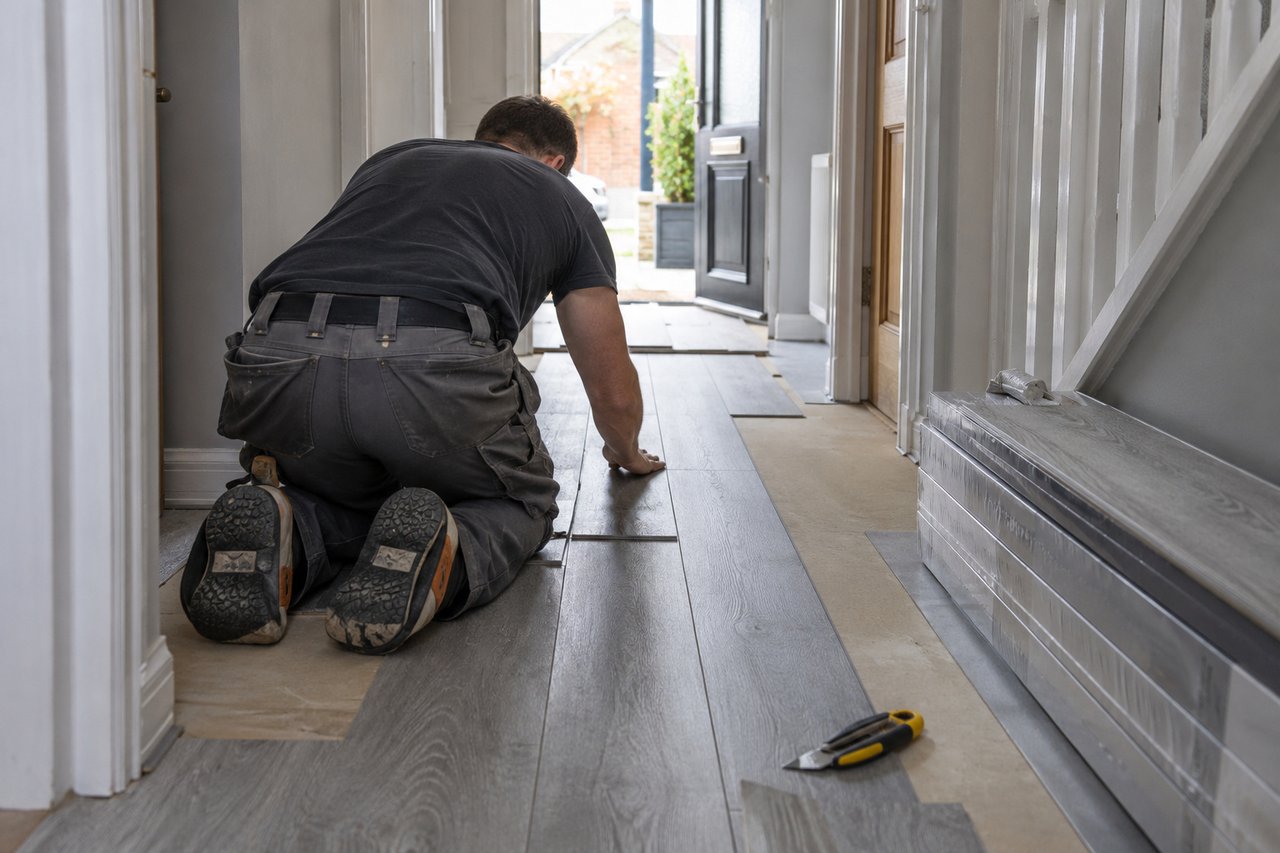
Landlord flooring is a choice between cost, comfort and how fast a damaged section can be replaced. This page compares vinyl, laminate, carpet and carpet tiles, explains the subfloor checks that save money, and covers lease and noise rules in flats.
Last checked: 22 October 2026.
Landlord flooring: choose by room
No single floor suits every room. Match the material to the water, wear and noise in each space.
- Kitchens and bathrooms: water-resistant vinyl, with sealed joints.
- Hallways and stairs: hard-wearing carpet or tough vinyl with grip.
- Living rooms: laminate, carpet or carpet tiles.
- Bedrooms: carpet, or laminate with a good underlay.
Keep the range small. Fewer products mean fewer spares to store.
Rental vinyl flooring: waterproof and wipeable
Vinyl suits wet rooms because it has no gaps for water. Sheet vinyl has few joins. Luxury vinyl planks and tiles look like wood or stone and can be replaced piece by piece.
Fit vinyl over a smooth, dry, clean base. Any lumps or gaps in the boards will show through in time. Seal edges around baths, toilets and thresholds.
Carpet tiles for landlords
Carpet tiles let you swap a stained tile instead of the whole room. Keep a few spare boxes from the same batch, because colours can vary between production runs.
They are quicker to lay than rolled carpet and need less waste. Choose a commercial-grade tile with a stain-resistant face for busy areas.
Subfloor moisture check before you lay
A new floor over a damp base fails. Check solid floors for moisture with a test before fitting. For timber floors, look for rot, woodworm and weak boards.
Fix the cause of damp first. Our floor and basement insulation page explains how ground floors lose heat and trap moisture, and our damp, mould and ventilation page covers the wider fix.
Flooring in flats and leases
Many leases for flats require carpets or other sound-reducing floors. Laying laminate or hard flooring without permission can breach the lease and cause noise complaints.
Read the lease or ask the managing agent before you choose. Underlay with an acoustic rating can help, but it does not replace permission.
Laminate and engineered boards
Laminate suits living rooms and hallways when the base is flat. It needs expansion gaps at the walls, hidden under skirting or beading. Water-resistant boards cope with spills, but standing water still damages the joints.
Underlay does more than add comfort. It evens small bumps, reduces noise and, on solid floors, may include a moisture barrier. Check the maker's rules for use with underfloor heating.
Stairs, thresholds and transitions
Stairs deserve extra care. Carpet should be fixed firmly with no ripples, and nosings must grip. Where two floors meet, use a proper threshold bar so edges do not lift or trip anyone.
Check door clearances before choosing a thicker floor. A door that no longer opens over the new surface needs trimming, and that should be priced in advance.
Safety and trip hazards
A floor that lifts, curls or has loose boards is a trip hazard. Housing health and safety law covers falls, so keep floors even and stair coverings secure. Check stair nosings and thresholds at every turnaround.
Adviser tip from a Level 7 Senior Construction Manager (MCIOB): lay flooring last, and protect it with hardboard or sheeting while other trades finish. Most flooring damage happens in the final week.
Keep a spare stock
Store a few spare tiles, planks or offcuts from the job in a labelled box. Note the product name, batch and date. A matching replacement years later is hard to find without that record.
Flooring and the EPC
Floors do not change the EPC by themselves. Insulating a suspended timber ground floor can. If boards are lifted for new flooring, it is the cheapest moment to insulate underneath.
The EPC C by 2030 rule is confirmed government policy, not yet law, as at 22 October 2026. See our EPC C 2030 guide.
Who delivers the work
Compliant Lets is a trading name of LAMTANS Holdings Ltd. LAMTANS Engineering Ltd fits the flooring, with levelling, underlay and trims included in the written scope. See our refurbishment page for the wider order of works.
Sources
- GOV.UK: Housing health and safety rating system, guidance for landlords, checked 22 October 2026
- GOV.UK: Improving the energy performance of privately rented homes, government response, checked 22 October 2026
Designed & developed by LAMTANS Technologies LLC, USA — part of the LAMTANS Group
Frequently asked questions
What is the best flooring for a rental?
Water-resistant vinyl in wet rooms and carpet or laminate elsewhere. The best choice depends on the room and tenant.
Is laminate suitable for a flat?
Only if the lease allows it. Many leases require carpet or sound-reducing floors.
Can I lay vinyl over old tiles?
Sometimes. The surface must be flat, dry and sound, and a smoothing layer is usually needed.
How long does a floor last in a let home?
It depends on traffic and quality. A commercial-grade product lasts longer than a budget one.
Should I lay carpet in bedrooms?
It is warm and quiet, but harder to clean. Many landlords use carpet there and vinyl elsewhere.
Do I need to replace underlay?
Usually, with a new carpet. Old underlay is flat and may hold moisture and odour.
Does flooring affect the deposit?
Worn flooring is fair wear and tear. Deductions need evidence of damage beyond that.
Can I lay flooring before the other trades finish?
It is better to wait. Flooring is the most easily damaged finish.