
Draught proofing rental property: a low-cost quick win
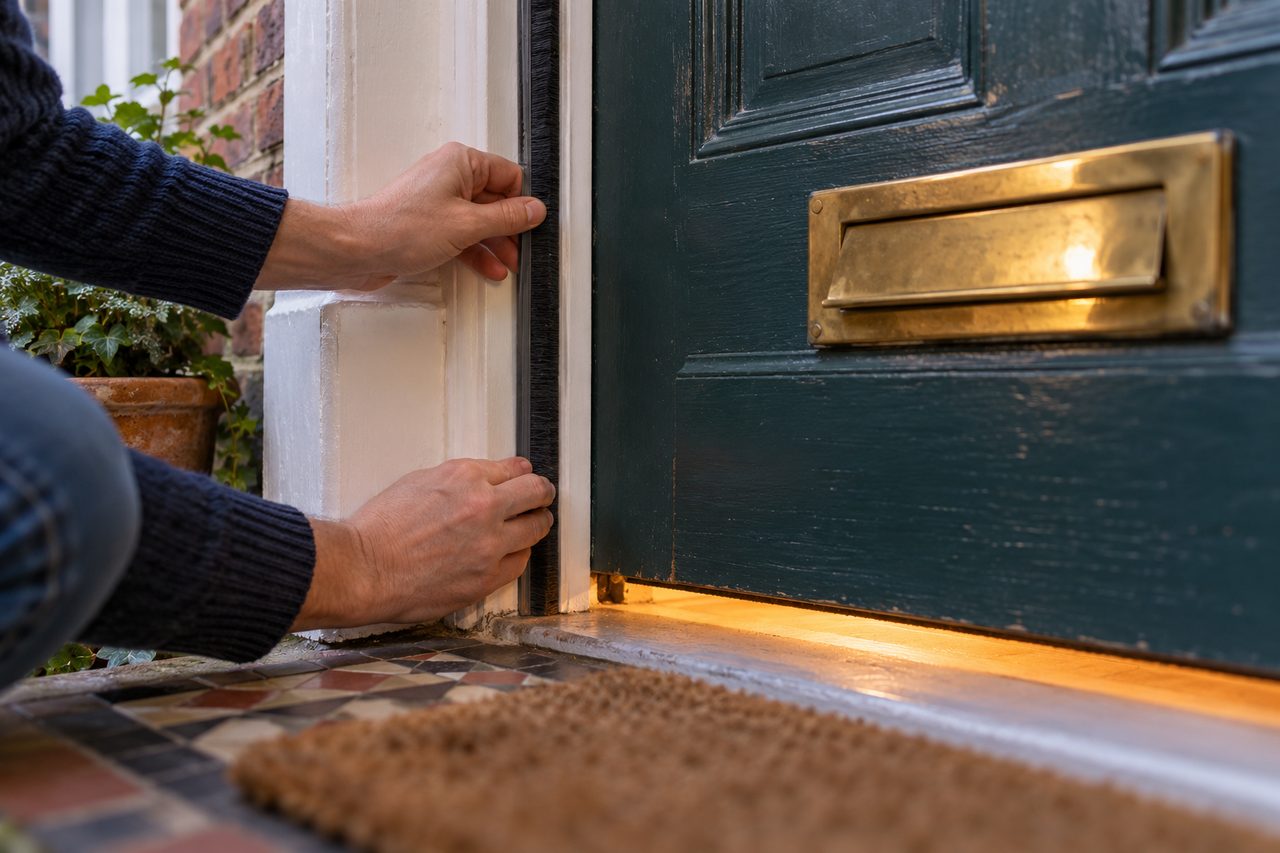
Draught proofing rental property is often the cheapest job on a landlord's upgrade list. Sealing gaps stops cold air getting in and warm air leaking out, which tenants notice quickly. Done carelessly, it can also cause damp. This page shows where to seal, where not to, and what it costs.
Last checked: 21 October 2026.
Book a free retrofit assessment
Where do the draughts come from?
Most rented homes leak at the same places. A survey walks through each room and records them.
- Opening windows and fixed window frames.
- External doors, letterboxes and keyholes.
- Gaps between floorboards and under skirting boards.
- Loft hatches and pipe entry points.
- Cracks in walls and unused extractor outlets.
- Open chimneys that are no longer in use.
Draught proofing windows and doors
The Energy Saving Trust suggests foam or brush strips for opening windows and silicone sealant for fixed ones. Doors need edge strips, letterbox flaps, keyhole covers and a bottom seal.
Internal doors should not be draught proofed. Old sash windows and traditional doors often need specific materials, so older homes benefit from a professional. Where the frames are beyond repair, see windows and doors.
Chimney draught proofing
An open chimney that is not used lets heat escape all year. A cap on the pot or a removable excluder fitted in the opening reduces the loss. The Energy Saving Trust puts the saving at around £45 a year in Great Britain, with caps starting at about £150.
An excluder must never fully block a flue that serves a fire or an appliance. Remove it before lighting a fire. A chimney used for a gas appliance needs a Gas Safe engineer's advice first.
Ventilation after draught proofing
This is the part that landlords must not skip. A tighter home holds more moisture from cooking, bathing and drying clothes. Without airflow, that moisture condenses on cold surfaces and mould follows.
Never block extractor fans, wall vents, airbricks, underfloor grilles or trickle vents. Leave trickle vents open. If a home has no trickle vents, wall vents or mechanical ventilation, the Energy Saving Trust warns that it may already be too airtight for more sealing. Fixed ventilation needed by flueless or open-flue appliances must stay open.
The checks we make are set out in our damp, mould and ventilation guide.
Draught proofing cost
The Energy Saving Trust says professional draught proofing of windows and doors could cost around £250 for a whole house, with a saving of around £55 a year in Great Britain. These are national guide figures, not our prices.
| Item | Guide figure, Great Britain | Source |
|---|---|---|
| Professional windows and doors, whole house | Around £250 | Energy Saving Trust |
| Saving per year, windows, floors and doors | Around £55 | Energy Saving Trust |
| Chimney cap | From about £150 | Energy Saving Trust |
| Our price from | Indicative from £350, not a quote | LAMTANS Engineering |
Source: Energy Saving Trust, checked 21 October 2026. Work done since 1 October 2025 counts towards the £10,000 cap.
How draught proofing helps you reach EPC C
Sealing gaps cuts heat loss without touching the structure. It pairs well with bigger fabric work such as loft insulation. The new EPC leads on fabric, under policy that is confirmed but not yet law.
We name no point gains, because the bands are unpublished. An assessor models your property instead.
Grants for draught proofing in Greater Manchester
Draughtproofing appears on GMCA's measure list for the Warm Homes: Local Grant. Landlords must support the Good Landlord Charter, and the home must be rated D or E with an eligible tenant household. A first property can be fully funded within a £15,000 energy performance limit. Later ones receive half, to £7,500.
GMCA states no closing date, while ECO4 ends on 31 December 2026. See the grants for landlords guide. Source: GMCA, checked 21 October 2026.
How the process works
- Walk-round: an assessor lists every leak and tests the existing ventilation.
- Scope: a written price notes which vents stay and which fans need attention.
- Sealing: our installer closes the gaps and leaves vents open.
- Handover: a record of the work goes into your files.
Who delivers the work
Compliant Lets is a trading name of LAMTANS Holdings Ltd. The work is delivered by LAMTANS Engineering Ltd, which holds PAS 2030, PAS 2035 and TrustMark. Check the registers yourself: TrustMark, RECC, ICO, Gas Safe Register and Simply Certification.
Adviser tip, from a Retrofit Coordinator: draught proof last, after you have checked the extractor fans and vents work. Sealing a home with a broken bathroom fan is how a quick win turns into a mould complaint and a repair bill.
Sources
- Energy Saving Trust: Draught proofing, checked 21 October 2026
- GMCA: Warm Homes Local Grant, privately rented scheme, checked 21 October 2026
- GOV.UK: Improving the energy performance of privately rented homes, government response, checked 21 October 2026
Designed & developed by LAMTANS Technologies LLC, USA — part of the LAMTANS Group
Frequently asked questions
How much can draught proofing save?
The Energy Saving Trust estimates around £55 a year for windows, floors and doors in Great Britain. Savings depend on how leaky the home is now.
Can a tenant do it themselves?
Simple strips are low risk. But tenants should not block vents or fans. For a rental, a documented professional job gives you better records.
Will draught proofing cause damp?
It can if ventilation is blocked or missing. A tighter home holds more moisture, so we check fans, vents and trickle vents first.
Should I draught proof every room?
Not internal doors. Seal external gaps and leave ventilation open. Rooms with open fires or flued appliances need particular care.
Do I need the tenant at home?
Access is needed, but most jobs take little time and cause little mess. We arrange timing with you and the tenant.
Is draught proofing a good first step for landlords?
Yes, because it is low cost and fast. It rarely reaches EPC C on its own, so treat it as part of a plan.
Is there a grant for draught proofing?
Possibly. The Warm Homes: Local Grant lists it, if landlord, home and tenant qualify. ECO4 ends on 31 December 2026.
Can I block an unused chimney?
Use a cap on the pot or a removable excluder that does not fully seal the flue. Never block a flue serving an appliance or fire.
How do I know if my home is too airtight?
A home with no trickle vents, wall vents or mechanical ventilation may already be too airtight for more sealing. An assessor can check.