
Landlord bathroom refit: dry walls, safe water, simple upkeep
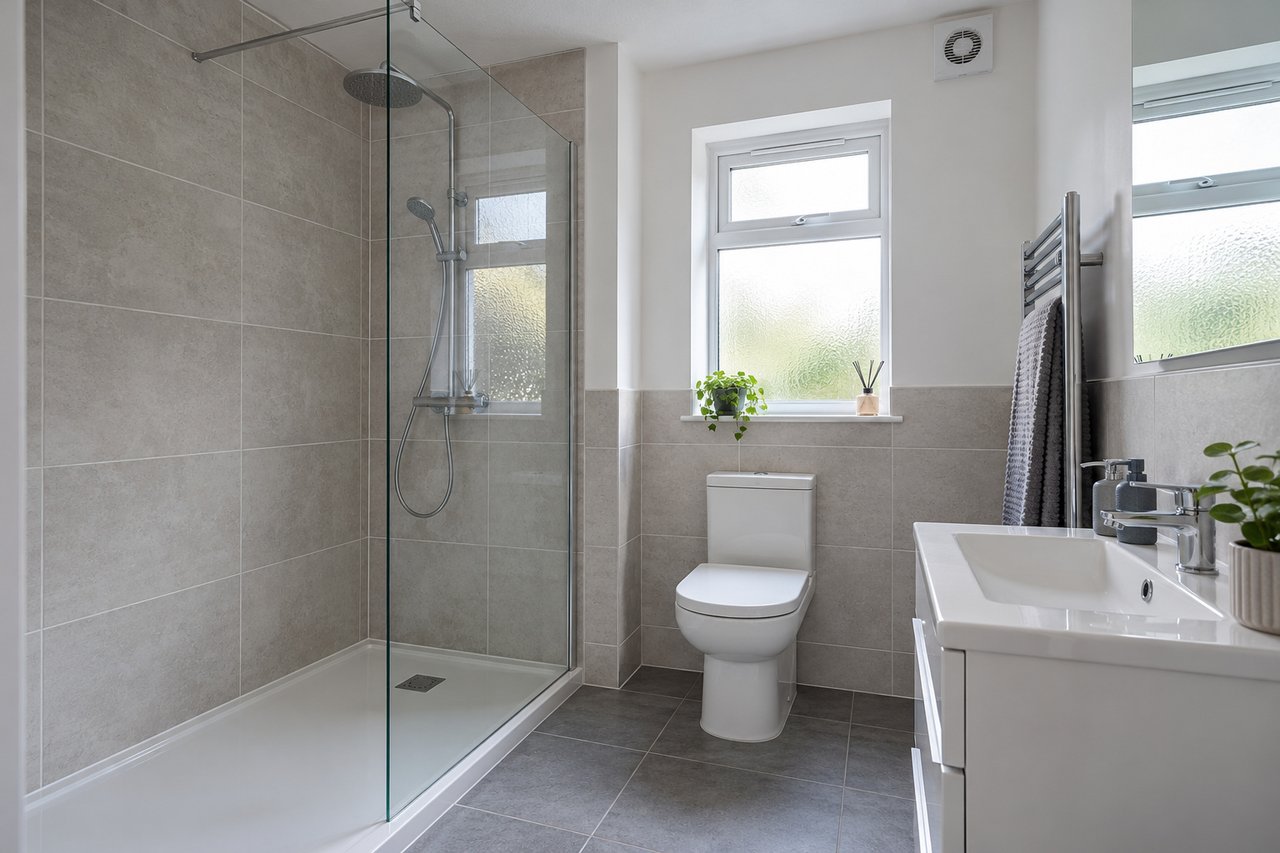
A landlord bathroom refit protects the room that suffers most from water. This page explains how to waterproof it, ventilate it, keep hot water safe and electrics compliant, and how a refit runs from the first survey to a tested handover.
Last checked: 22 October 2026.
Landlord bathroom refit: what to fix first
Fix the water problem before the decoration. A new suite on a leaking pipe or a failed seal is money wasted.
- Leaks from pipes, waste and the shower tray.
- Cracked or lifting tiles and perished sealant.
- Rotten floor boards under the bath or toilet.
- Mould on walls and ceiling.
- Worn taps, cisterns and flush mechanisms.
After the repairs, decide whether to refit the suite or refresh it with new sealant, taps and a deep clean.
Rental bathroom waterproofing: walls, floor and joints
Waterproofing is the part nobody sees and everybody pays for later. Wet areas need a proper tanking layer behind the tiles, not only grout and sealant.
Walls and shower area
Tile boards or tanked backer boards resist moisture better than plain plasterboard. Seal every penetration where a pipe or fixing passes through.
Floor
Use a water-resistant floor with welded or sealed joints. Lift any rotten boards and treat the joists before the new floor goes down.
Bathroom ventilation extractor: size it and vent it outside
A bathroom makes steam in minutes. Without an extractor, the moisture settles on cold walls and mould grows. Look for a fan that ducts to the outside, runs quietly and has a humidity or overrun timer.
Tenants switch off fans that are noisy or need a separate switch. A quiet fan on a timer or humidity sensor keeps working without anyone thinking about it. Our damp, mould and ventilation page explains how this fits with the rest of the home.
Shower and bath safety for rented homes
Choose a shower or bath for the household you let to. Non-slip surfaces and grab points suit older tenants. A walk-in tray avoids a high step.
Hot water needs controlling. Building Regulations limit the hot water temperature at a bath, and a thermostatic mixer valve protects against scalds. Landlords must also assess legionella risk in the water system, which is simple in most small homes but must be recorded.
Bathroom electrical zones: keep sockets and lights compliant
Electrical work in a bathroom is regulated. Fittings must be rated for their zone, and shaver sockets, lights and fans need the right protection. This is notifiable work under Part P of the Building Regulations in most cases.
Landlords must also have the electrical installation inspected at least every five years. Our electrical and gas safety page lists what an inspection covers.
How a bathroom refit runs
- Survey: we check the floor, walls, pipes and extraction.
- Written plan: each item is listed and priced separately.
- Strip out and repair: the room is cleared and any rot is treated.
- First fix: plumbing and electrics are run to the new layout.
- Tanking and tiling: the room is waterproofed, then finished.
- Fit and test: the suite, shower and fan are fitted, then tested.
Adviser tip from a Level 7 Senior Construction Manager (MCIOB): never tile onto a floor you have not checked. Press the boards and look at the joists first, because tiling over rot only hides it.
Small details that cut call-outs
Choose taps and cisterns with parts that are easy to buy. Fit isolation valves so a tenant or plumber can shut off one fitting without draining the house. Use a lockable, accessible stopcock.
Keep a note of the make and model of every fitting. When something fails in three years, the replacement takes minutes to order instead of a day of searching.
Plan the bathroom with other works
Do the bathroom after heating or plumbing changes, because pipes will cross the room. If you are also upgrading the boiler or hot water, read our heating controls and hot water page first. For the whole property, see the refurbishment page.
Who delivers the work
Compliant Lets is a trading name of LAMTANS Holdings Ltd. LAMTANS Engineering Ltd carries out the bathroom work. Plumbing, electrical and gas parts are tested, and the records come to you at handover.
Sources
- GOV.UK: Building regulations approval, checked 22 October 2026
- GOV.UK: Approved documents, checked 22 October 2026
- HSE: Legionnaires' disease, landlords' responsibilities, checked 22 October 2026
Designed & developed by LAMTANS Technologies LLC, USA — part of the LAMTANS Group
Frequently asked questions
How long does a landlord bathroom refit take?
It depends on repairs found and the layout. We give a programme with the written plan after a site visit.
Can I refit a bathroom during a tenancy?
It is usually easier between tenants. If it must be done during a tenancy, agree access and an alternative bathroom first.
Do I need an extractor fan?
A fan that vents outside is the best defence against mould. Building Regulations set ventilation requirements for new work.
Is a thermostatic shower valve required?
Hot water at a bath is limited by regulation, and a mixer valve is a sensible protection in any shower.
Should I tank the walls?
Yes, around showers and baths. Tanking stops water reaching the wall behind the tiles.
Who checks the electrics?
A qualified electrician tests the work and issues a certificate. Notifiable work also needs a Part P notice.
Does mould in the bathroom mean a bigger problem?
Often it means poor ventilation. Fit or repair the fan, then look for leaks if it returns.
Can finance cover the work?
Finance may be available through Ideal4Finance, subject to status. We can send the approved wording on request.