
EPC C landlords Wigan: stock, licensing and grant help
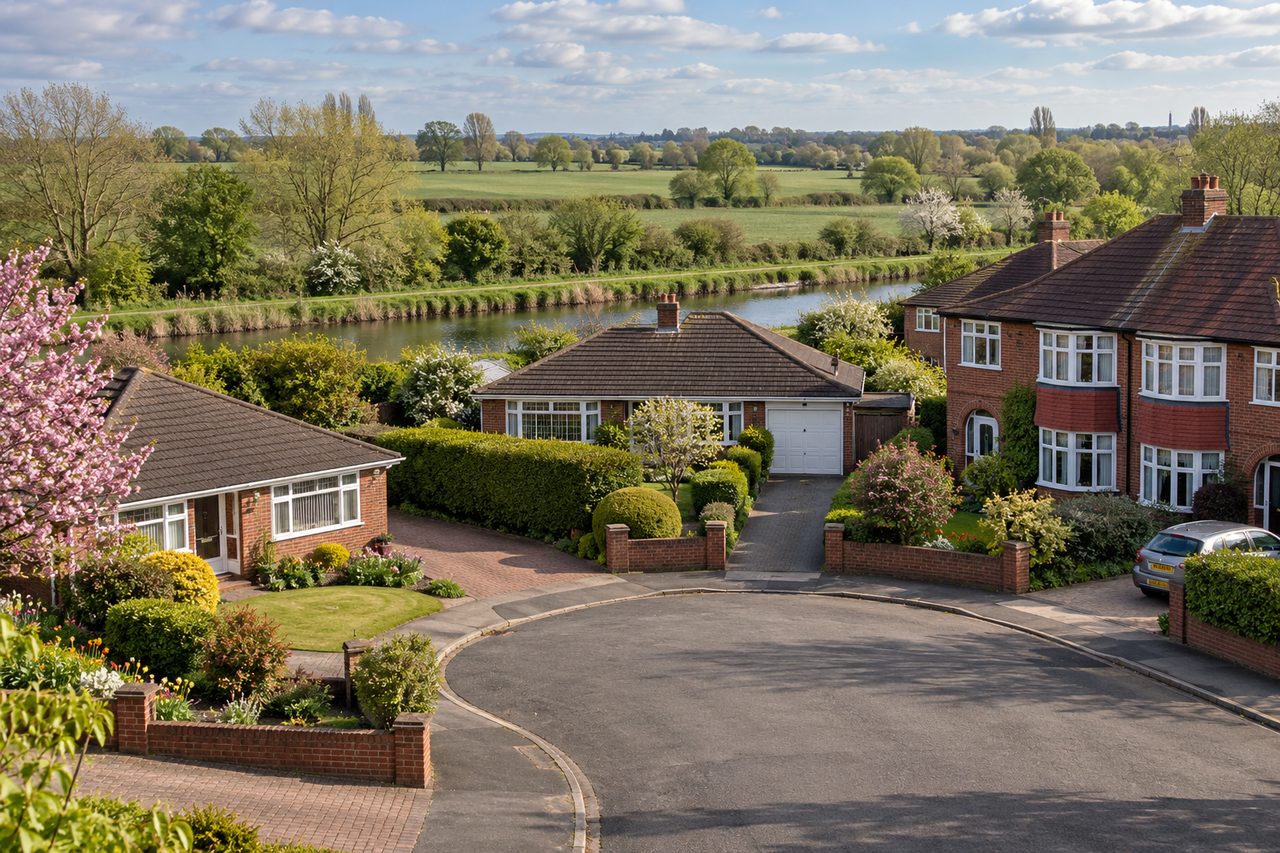
EPC C landlords Wigan let in the lowest-rent borough of our five pilot areas, where the £10,000 cap weighs more heavily against income. Wigan also has no selective licensing and an unusually high share of bungalows. Here is the local evidence, dated and sourced, for landlords planning ahead.
Last checked: 21 October 2026. EPC C by 2030 is confirmed government policy, not yet law. Legislation is targeted for 2027. See the EPC C 2030 guide.
Private rented homes Wigan: Census 2021 figures
Private renting rose from 11.6% of households in 2011 to 15.9% in 2021, a gain of 4.3 percentage points (ONS, Census area changes). The tenure mix is 66.4% owner-occupied, 17.0% social rented and 15.9% private rented.
GMCA's April 2023 briefing counts 22,761 private rented households out of 143,105. Only Manchester and Salford have more among the five boroughs we cover.
Wigan's housing stock in detail
Wigan's Local Housing Needs Assessment (October 2024) uses Valuation Office Agency figures for 2023. Semi-detached homes lead at 36.1%. Terraces follow at 28.9%, detached homes at 14.7%, bungalows at 10.8% and flats at 9.5%.
Age matters too. About 35% of dwellings pre-date 1945, and 19.6% were built before 1919. A further 22.4% date from 1965 to 1982.
Two features set Wigan apart from the inner-city boroughs. Flats are scarce, so freeholder consent matters less. Bungalows are common, which changes the loft question.
Semis and mid-century homes
Semis built between the wars and after 1945 often have cavity walls. Cavity filling and a thicker loft layer are the usual first checks. See our loft insulation guide.
Bungalows at 10.8%
A bungalow has a large roof for its floor area. In our reading, roof insulation and ventilation often matter more here than in a two-storey house. An assessor confirms it.
Pre-1919 terraces
Older terraces usually have solid walls. They need a damp check before wall insulation, and they are where the cap is most likely to be tested.
Wigan landlord licensing: what the council says
Wigan Council states it does not operate a selective licensing scheme in any part of the borough. Wigan landlord licensing therefore centres on HMOs.
The council page gives two thresholds without reconciling them. One says a licence is needed for five or more occupants. Another describes three people from two or more households sharing a basic amenity. Ask the council which applies to your house.
Licences run for up to five years for landlords with a good history, and for one to three years where there are concerns. Duration does not change the fee. Failing to hold a required licence risks a fine of up to £30,000 or prosecution. The council page we read did not list fee amounts.
The council also runs a Landlord Hub, a bond scheme and a tenant matching service, and it publishes a page on minimum energy efficiency standards.
AWARM Wigan and Wigan landlord grants
Greater Manchester's Warm Homes: Local Grant lets a landlord's first property receive up to £30,000, with 50% up to £15,000 for later ones. Landlords must support the Good Landlord Charter. Our Warm Homes Local Grant guide lists the steps.
AWARM Wigan is the council's referral service. It offers advice, benefit checks and help finding funded improvements. A household qualifies if it gets income-related benefits or earns under £36,000, and has poor heating or insulation or a health condition made worse by cold. The page has no landlord-specific rules, and it notes that rented homes need the landlord's consent.
What the £10,000 cap means for EPC C landlords Wigan
This section is our analysis from ONS figures.
| Measure | Wigan figure | Source and date |
|---|---|---|
| Average private rent | £749 a month, up 6.4% in a year | ONS, September 2026 |
| Average house price | £194,000, up 2.8% in a year | ONS, August 2026 (provisional) |
| Cap in months of average rent | About 13.4 months | Our calculation |
| Cap as share of average price | About 5.2% | Our calculation |
Wigan has the lowest figures of our five boroughs. The cap is more than a year of average rent. For a pre-1919 terrace, one wall measure plus heating could use much of it. Policy sets a lower cap of 10% of value only for homes valued under £100,000, so ask for a valuation if your house is modest. Our cost cap and exemptions guide lists the exemptions.
The council's 2023 assessment put median rent at £750, against £1,101 for Greater Manchester.
Wigan case study and enquiries
Delivery
Compliant Lets is a trading name of LAMTANS Holdings Ltd. LAMTANS Engineering Ltd delivers the work.
Sources
- ONS: Census area changes, Wigan, checked 21 October 2026
- GMCA: Census 2021 housing tenure briefing, April 2023, checked 21 October 2026
- Wigan Council: Housing Needs Assessment, October 2024, checked 21 October 2026
- Wigan Council: Do I need to apply for a landlord licence?, checked 21 October 2026
- Wigan Council: HMO further information, checked 21 October 2026
- Wigan Council: AWARM service and eligibility, checked 21 October 2026
- GMCA: Warm Homes Local Grant, privately rented scheme, checked 21 October 2026
- ONS: Housing prices in Wigan, checked 21 October 2026
- GOV.UK: Improving the energy performance of privately rented homes, government response, checked 21 October 2026
Designed & developed by LAMTANS Technologies LLC, USA — part of the LAMTANS Group
Frequently asked questions
Does Wigan have selective licensing?
No. Wigan Council says it does not operate a selective licensing scheme in any part of the borough. HMO licensing still applies, so check the thresholds with the council.
Which Wigan HMOs need a licence?
The council page names two tests, five or more occupants, or three people from two or more households sharing an amenity. Confirm with the council before relying on either.
Is AWARM a landlord grant?
No. It is an advice and referral service. Households qualify on benefits or income under £36,000 plus poor heating or health need. Landlord consent is needed for work in rented homes.
Why do bungalows matter for my EPC plan?
Bungalows are 10.8% of Wigan's homes and have large roofs for their size. Roof insulation and ventilation are often early checks, though only a survey can say.
Does the cap bite harder in Wigan?
It may. The cap equals about 13 months of average rent here, and about 5.2% of the average price. Measures on older terraces can use much of it.
Is a one-year licence common for new HMO landlords?
The council page says new HMO landlords may be given a one-year trial licence, extendable after a review of compliance. Licences can also be shortened for late applications.